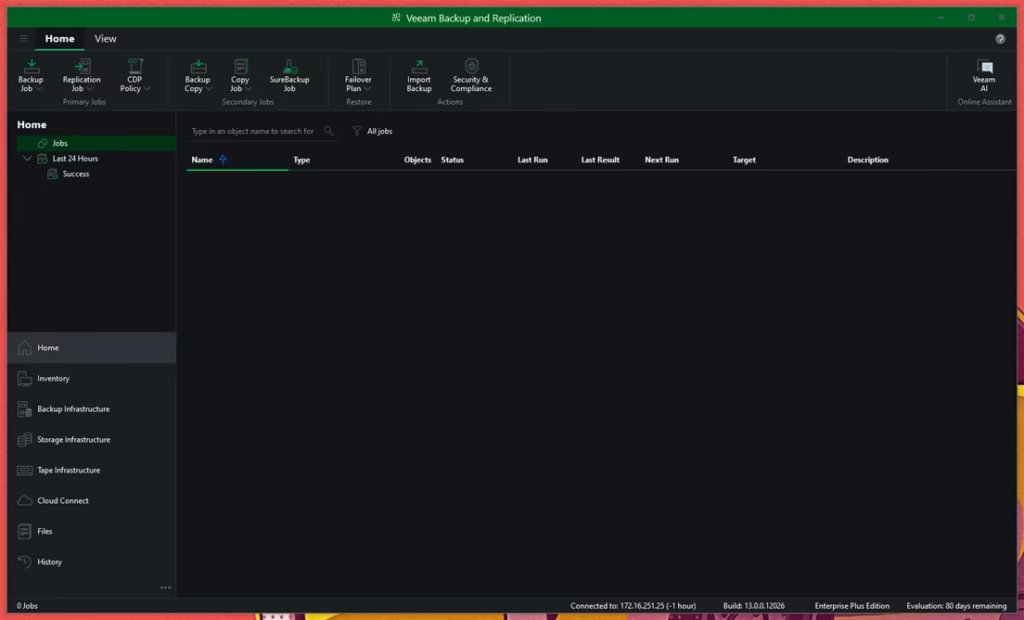
Veeam 13 Innovations: New Version, Features, and Advantages
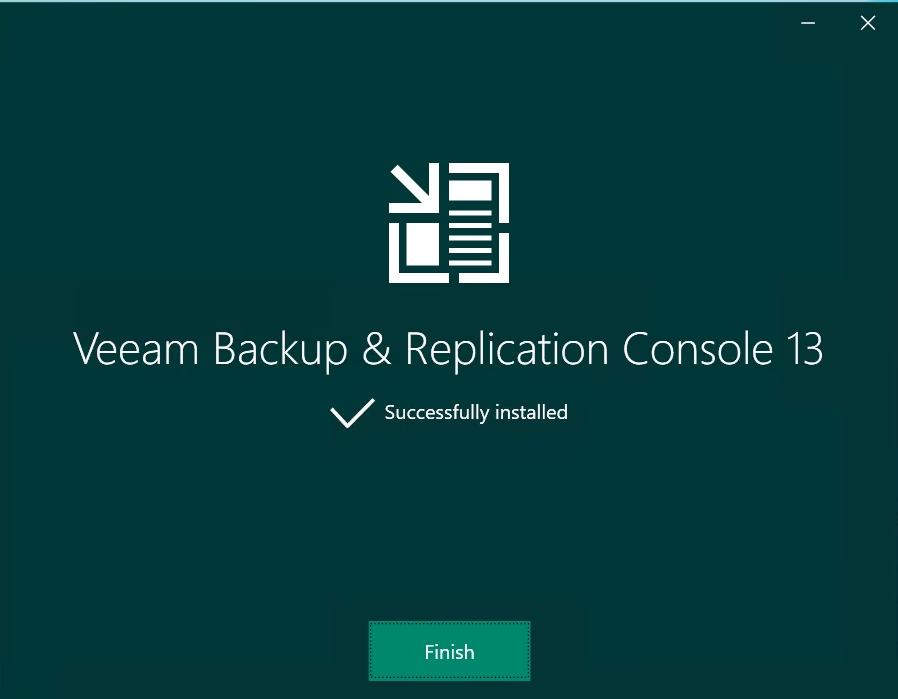
The next-generation version of Veeam, Veeam 13, has been officially announced. This release introduces significant enhancements in performance, security, manageability, and alignment with modern infrastructure expectations.
In this article, we’ll focus on what Veeam 13 is, its key innovations, major advantages, and recommended upgrade strategies.
Overview
The first release of Veeam Backup & Replication 13 (V13.0.0) was published on September 3, 2025.
This initial version is primarily available as a Veeam Software Appliance (VSA) for new installations.
Direct upgrades from existing V12 deployments are not yet supported in this early release.
A fully featured version, including upgrade support, is planned for Q4 2025 under the V13.0.1 build.
Key Innovations in Veeam 13
1. Linux-Based Appliance Architecture
In the new release, the Veeam Software Appliance (VSA) is delivered as a preconfigured Linux-based virtual appliance.
Additionally, the Veeam Infrastructure Appliance (VIA) enables the deployment of backup infrastructure components without manual setup.
While traditional Windows installations remain supported, there is a strong shift toward Linux-based solutions.
2. Web Interface
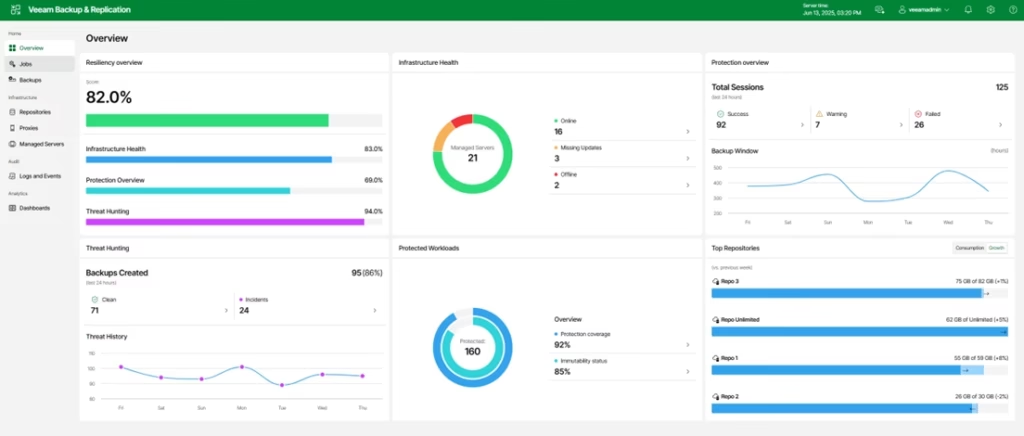
A new web-based user interface (Web UI) has been introduced, enabling many administrative tasks to be performed directly from a browser.
The interface comes with a modernized design and includes Dark Mode support.
3. Performance Enhancements
The release integrates the BLAKE3 hashing algorithm, reducing proxy and agent CPU usage while improving efficiency.
The Instant Recovery engine has been enhanced—virtual machines running directly from backup now deliver up to 50% faster I/O performance compared to the previous version.
Parallel job execution capacity has also been increased, allowing more virtual machines to be managed within a single backup job.
4. Security and Management
The Role-Based Access Control (RBAC) model has been improved, now featuring a custom role definition tool.
Single Sign-On (SSO) support enables integration with external identity providers.
On the database side, PostgreSQL 17.6 is now in use, offering automated upgrade support.
Network port requirements have been simplified, reducing the number of open ports.
5. Deprecated Features
Some legacy features are no longer supported.
For example, the reversed incremental backup mode has been removed.
Retention by restore point count is being deprecated—only time-based retention will be available.
Additionally, support for certain older Veeam Agent versions is being phased out.
Advantages of Veeam 13
Simplified Deployment and Maintenance:
The Linux-based appliance architecture allows for faster setup of infrastructure components.Enhanced Performance:
New algorithms and the improved Instant Recovery engine boost workload efficiency.Modern Access and Security:
Web UI, RBAC, SSO, and simplified network configurations improve both usability and security.Future-Ready Architecture:
Reduced Windows dependency brings greater flexibility to Linux-based environments.Streamlined Compliance and Management:
PostgreSQL upgrade support and automated updates ease administrative overhead.
Migration Strategy to Veeam 13
Currently, V13 is available only for new deployments.
Direct upgrades from V12 are not yet supported.
Full migration capabilities will be enabled once V13.0.1 is released.
Recommended migration steps:
- Perform a full infrastructure assessment.
- Create and test a lab environment.
- Develop a detailed backup and migration plan.
- Identify and review jobs using deprecated features.
- Validate license compatibility and component alignment.
Conclusion
With Veeam 13, the platform has been modernized to prioritize performance, security, and operational efficiency.
Although the current version is limited to new installations, once the full release with upgrade support becomes available in late 2025, widespread adoption across existing infrastructures is expected.